Fleurs et Embruns
Inside our new Spring & Summer menu — where the garden and the coast arrive at the same table.
Reworked each season, without losing the accent
Every season, the menu at Fleur de Mizu is reconsidered from the ground up — new produce, new pairings and a new seasonal title.
A few things, however, remain deliberately familiar.
Hokkaido scallops. Wet-aged Wagyu MB9+ striploin. A soufflé.
They are not simply carried over from one season to the next. They are part of the Fleur de Mizu vocabulary, reinterpreted each time around what the season brings.
Our cooking sits at the meeting point of French technique and Japanese ingredients and influence — not one cuisine decorated with the other, but two culinary languages given equal weight in the same dish.
A Wagyu tartare finished with nori and takana. Provençal ratatouille transformed into takikomi gohan. A soufflé that owes as much to Uji, Kyoto, as it does to a French pâtisserie bench.
That balance remains constant. What surrounds it changes with the calendar.
Portions are limited by design and sourced for the season. We are also happy to accommodate special dietary requirements wherever possible — simply let us know when booking.
Why “Fleurs et Embruns”
Every seasonal menu at Fleur de Mizu carries a title.
This season, Fleurs et Embruns holds two ideas at once.
Fleurs — flowers — speaks to spring: new growth, freshness and the garden coming back to life.
Embruns — sea spray — belongs to summer: the coast, salinity and the warmer months that follow.
Rather than asking one season to speak for both, we let each have its own voice.
Saumon Iodé carries the sea spray.
Canard Fleuri carries the flowers.
These two amuse-bouche open the Menu Dégustation — the first expression of the season for guests dining the full tasting menu.
For guests dining à la carte, the same two ideas continue throughout the dishes that follow. They are the thread running through the menu rather than simply its opening line.
From the new menu
St Jacques en Sous-Bois
Hokkaido scallops with shiitake & farro fricassée, tomato concassé, morel cream, chervil and rayu.
The sweetness of the scallop meets deeper earthy notes from shiitake and morel, lifted by fresh tomato and rayu.
Provence à Tokamachi
Ratatouille reimagined as takikomi gohan, with seasoned Koshihikari rice, renkon crisps, cured egg yolk snow and sundried tomato miso.
A familiar Provençal idea translated through Japanese ingredients and technique.
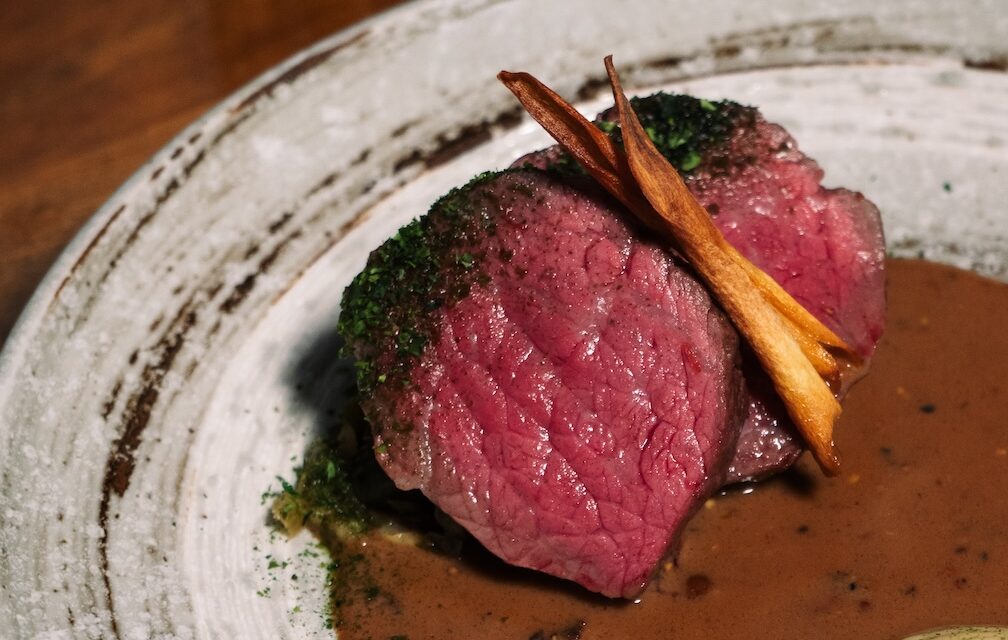
Boeuf, Terre d’Aomori
Wet-aged Wagyu MB9+ striploin with cauliflower & Aomori garlic purée, charred broccolini, kale chip and gobō & shio koji cream.
Richness, smoke and deep savoury flavours come together around the Wagyu.
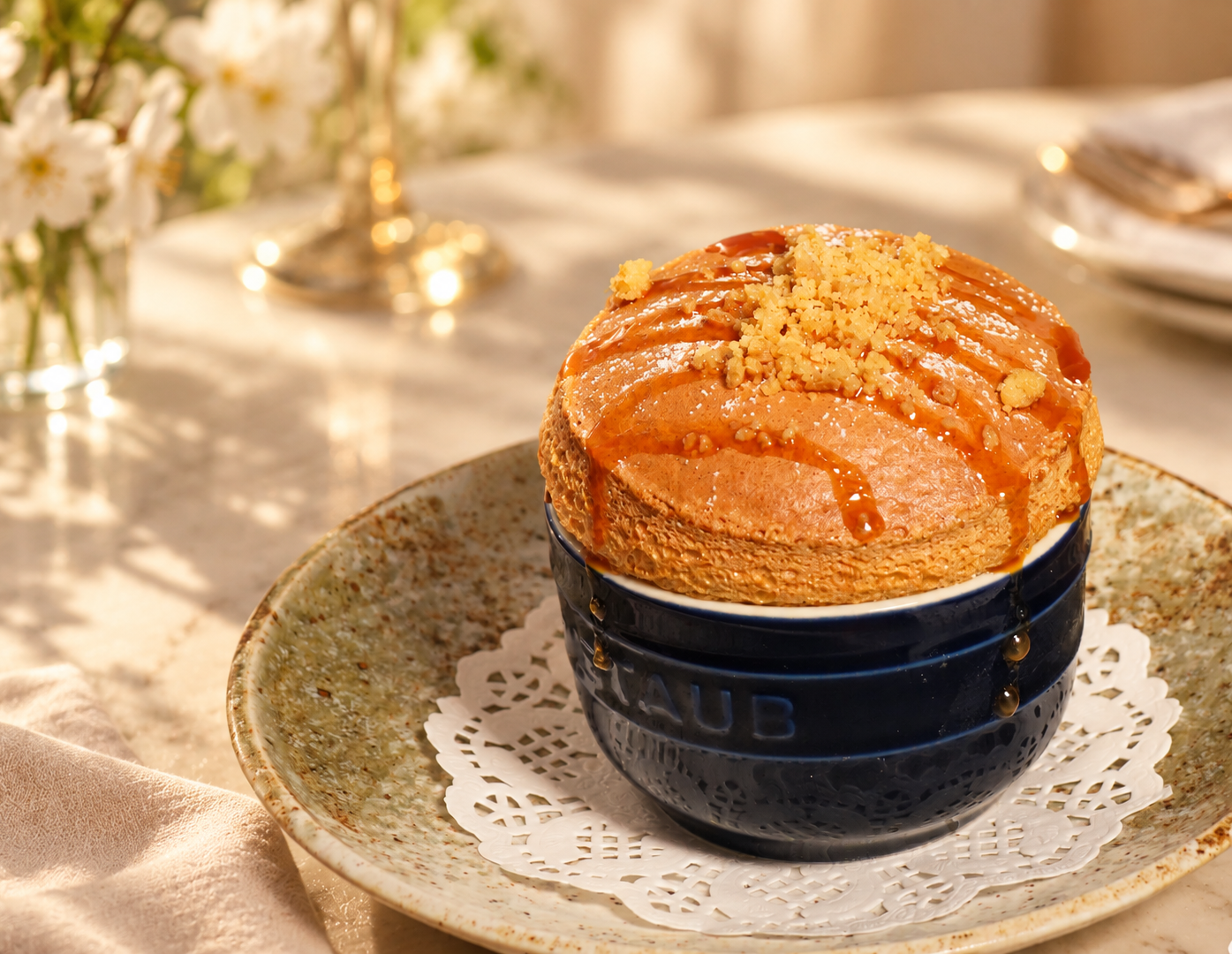
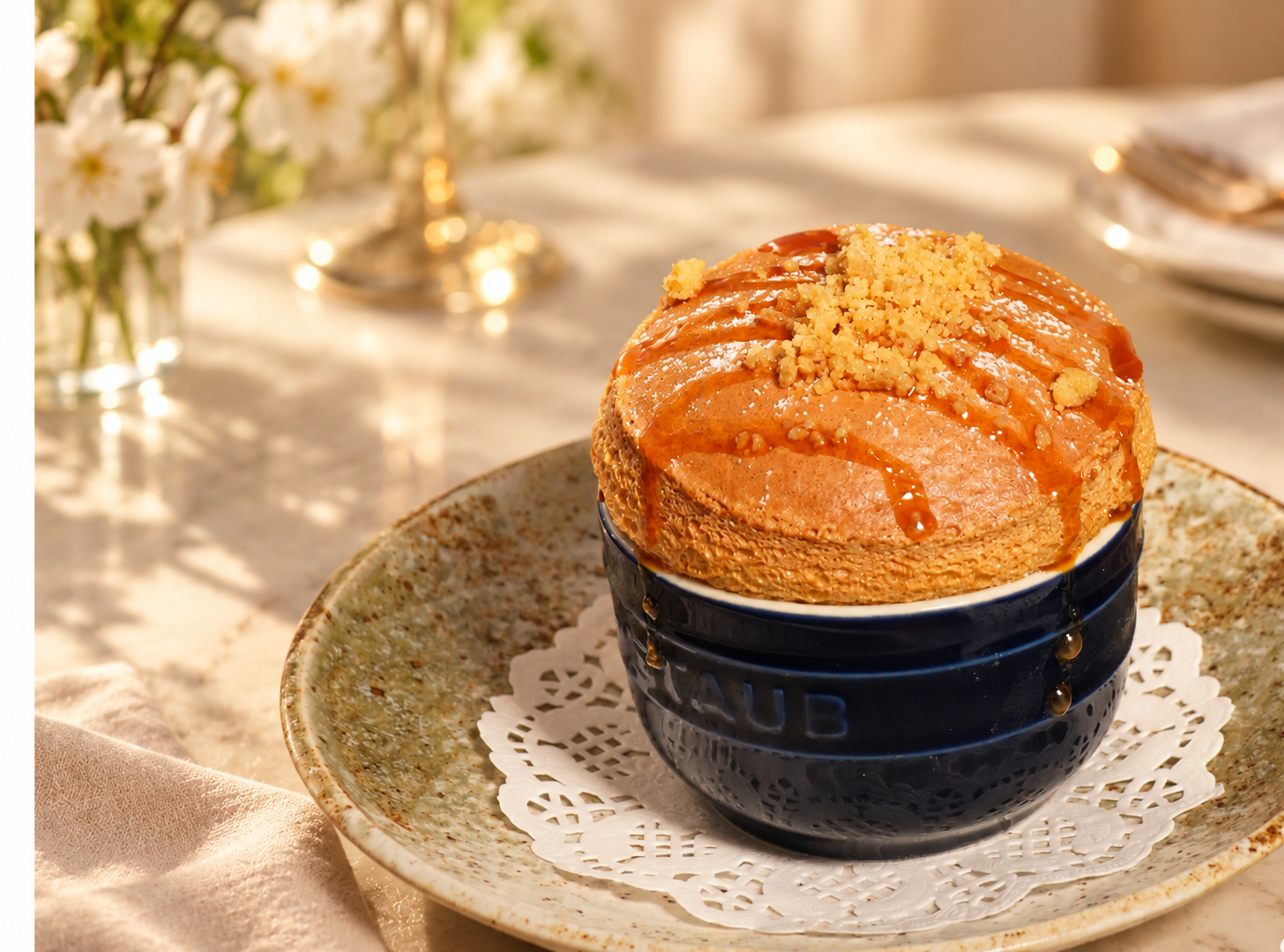
Soufflé d’Uji
Strawberry soufflé with almond & matcha frangipane and Kyoto Uji matcha ice cream.
Bright strawberry meets the gentle bitterness of Uji matcha — warm against cold.
Beyond the menu
Freshly shucked oysters are served with champagne mignonette, negi oil and finger lime, and are now available individually.
La Planche de Fernand, our charcuterie tasting platter, also returns for the season.
A note on dietary requirements
GF — Gluten Free
DF — Dairy Free
V — Vegetarian
Seafood origin:
A — Australian
I — Imported
M — Mixed
Please let us know of any allergies or dietary requirements when reserving. With a menu built around seasonal produce, our team will be happy to talk through the available options with you.
Fleurs et Embruns arrives this October
A new Spring & Summer season at Fleur de Mizu, shaped by the garden, the coast and the meeting of French technique with Japanese influence.
Seasonal produce means some dishes are available in limited quantities.